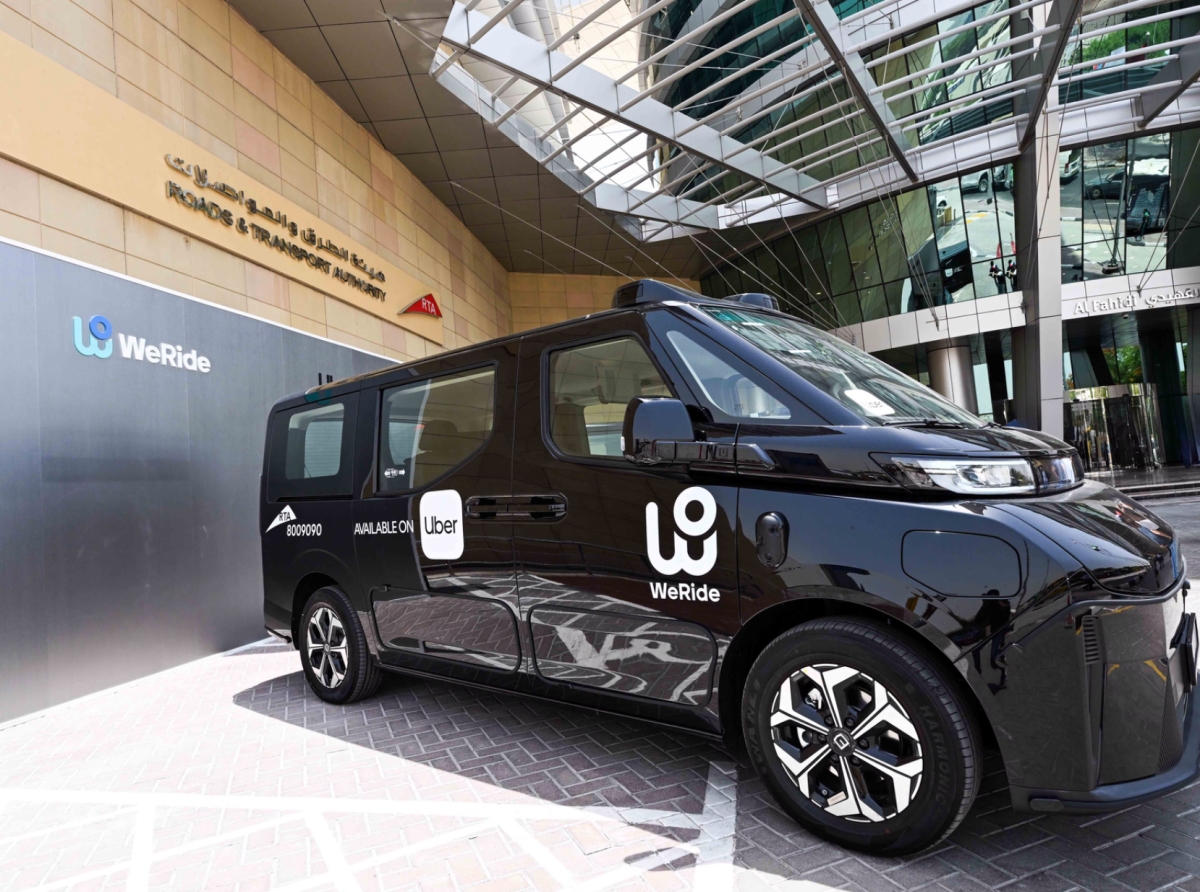
The pilot, available starting today, allows users to book WeRide robotaxis through the Uber app by selecting the “Autonomous” option. Service is currently limited to Umm Suqeim and Jumeirah, two high-traffic coastal districts near public beaches. The vehicles operate with a specialist safety driver on board as testing continues, with a transition to fully driverless service planned for early 2026.
Ahmed Bahrozyan, chief executive of RTA’s Public Transport Agency, said the launch follows a joint testing program with WeRide that began after the partnership was announced in April 2025. He said the pilot is intended to ensure a controlled and safe introduction of autonomous mobility to the public.
WeRide said its expansion in Dubai builds on autonomous systems that have been tested in multiple markets worldwide. The company currently operates about 150 autonomous vehicles in the Middle East, including more than 100 robotaxis, and has stated its goal of deploying tens of thousands of robotaxis globally by 2030.
Uber said the Dubai launch supports the UAE’s broader mobility objectives, including Dubai’s target for 25 percent of all journeys to be autonomous by 2030. The company positions the service as part of its strategy to integrate autonomous vehicles alongside human-driven rides on its platform.
The pilot comes amid rising demand for mobility in Dubai. The city’s population has surpassed 4 million, contributing to increased use of public transport, taxis, and shared mobility services. In 2024, Dubai recorded more than 153 million trips across its transport network. Demand for shared mobility rose by 28 percent compared with 2023, reinforcing the case for scalable and technology-driven transport solutions, including autonomous vehicles.
Photo credits: Government of Dubai Media Office
Alexander Agafiev Macambira
Alexander Agafiev Macambira is former tech contributing writer for Forbes Monaco.