
Conversations That Define a City, Its Society, and Lifestyle Where Ambition, Culture, and Innovation Converge. For inquiries about partnerships or guest opportunities, please contact our team at
All Stories
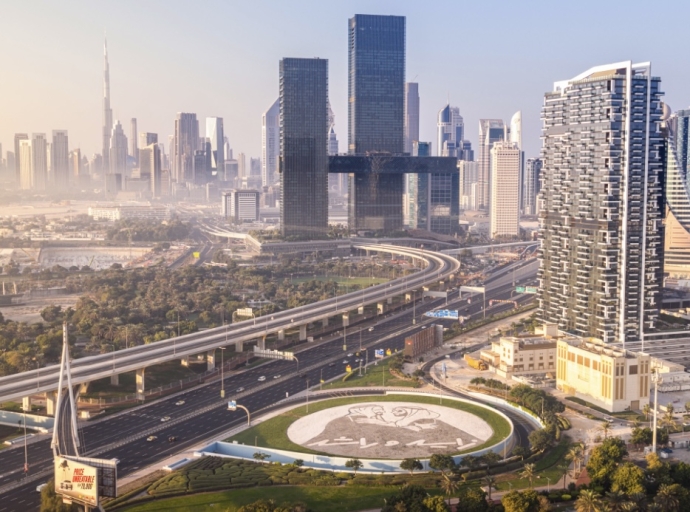
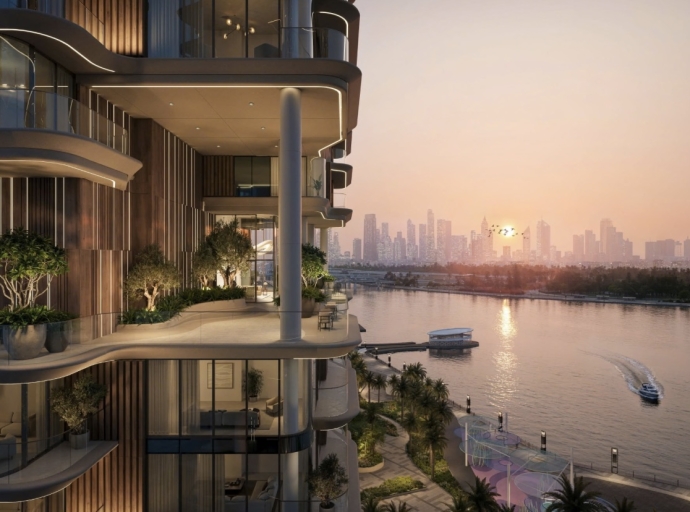
In a city that has repeatedly redefined the modern skyline, Dubai is preparing to unveil another architectural milestone. Ciel Tower, nearing completion in the densely built Dubai Marina district, is set to become the tallest hotel in the world. At approximately 365 meters (1,197 feet) and 82 floors, the tower will surpass the nearby Gevora Hotel to claim a new record—not for mixed-use or office space, but as a structure devoted entirely to hospitality.
The project, led by Dubai-based developer The First Group and managed under IHG Hotels & Resorts’ Vignette Collection, represents an assertive addition to a city that has used height as both symbol and strategy. The building’s stature alone places it on the global stage, but its development reflects deeper economic and urban planning ambitions.
Designed by the international architecture firm NORR Group, under the direction of principal architect Yahya Jan, Ciel was not initially intended to break records. It evolved into its current form through a combination of environmental analysis, engineering constraints, and the city’s ongoing pursuit of architectural distinctiveness. Wind tunnel studies and structural simulations led to a tapered silhouette capped by a narrow, open-air void—an aerodynamic feature that also serves as a visual signature on the skyline.
Internally, the building will contain over 1,000 guest rooms, including approximately 150 suites, all oriented to maximize views over the Arabian Gulf, Palm Jumeirah, and the surrounding marina. A vertical atrium, reaching close to 300 meters, anchors the interior space and is flanked by communal terraces, open sky gardens, and areas of passive ventilation. These design choices reflect an increasing emphasis on sustainable construction practices in high-rise developments, even in environments as extreme as the Gulf.
On the 76th floor, a rooftop pool is expected to become the highest of its kind globally. Higher still, the 81st floor will house a sky lounge and observation deck with uninterrupted, 360-degree views. Dining, meeting, and wellness spaces are integrated throughout the tower’s upper levels, along with a range of guest amenities distributed vertically to reduce congestion and improve flow.
Ciel Tower has been under construction since 2016. It now enters its final stages, with an opening anticipated in late 2025. The project’s timing is strategic: Dubai is pushing to expand its visitor base, particularly in high-spending tourism segments, as it transitions from an oil-centered economy to one increasingly reliant on real estate, trade, and international hospitality.
While the tower is certain to attract attention for its record-setting height, its broader significance lies in what it signals about Dubai’s urban trajectory. As the city’s skyline matures, new developments are forced to compete not just in scale, but in function and innovation. Ciel Tower does both. Unlike mixed-use supertalls, which blend office, residential, and hotel space, Ciel is singular in its purpose—each floor dedicated solely to accommodating guests.
The economic rationale is equally clear. Dubai Marina is among the city’s most densely populated neighborhoods, and Ciel’s location within it ensures a steady flow of business and tourist traffic. In addition to boosting visitor capacity, the hotel is expected to support thousands of direct and indirect jobs, and strengthen Dubai’s positioning as a dominant player in international hospitality infrastructure.
In a region where the limits of engineering are routinely tested and where buildings serve as emblems of national and civic identity, Ciel Tower is more than a record-breaker. It is a marker of the city’s continued bet on verticality as a form of global influence—and a reminder that in Dubai, height remains both ambition and argument.
Photo credits: Dubai Instagram.
Dubai is rapidly cementing its position as one of the world’s most visited destinations. In just the first half of 2025 (January to June), the city welcomed 9.88 million international overnight visitors, already surpassing the 18.72 million total recorded for all of 2024. This impressive 6% year-on-year growth puts Dubai firmly on track to achieve its ambition of ranking among the top three global tourism hubs, according to the Dubai Department of Economy and Tourism (source).
So, what’s fueling this explosive tourism momentum? It’s not just luck—it’s a carefully orchestrated mix of world-class infrastructure, aggressive international marketing, strong hospitality performance, and an expanding portfolio of attractions catering to a global audience.
First, Dubai’s seamless connectivity remains unmatched. Dubai International Airport (DXB) handled 46 million passengers in H1 2025, maintaining its title as the world’s busiest international airport. Despite ongoing geopolitical instability in parts of the Middle East, DXB’s efficiency and Dubai’s safety reputation have kept the flow of visitors steady and strong.
The hospitality sector has played a major role in supporting this surge. Hotel occupancy reached 80.6%, while 22.24 million room nights were booked—up 4% from the same period last year. The Average Daily Rate (ADR) climbed to AED 584, and Revenue per Available Room (RevPAR) rose to AED 471, signaling not just volume but profitability. Dubai currently offers 152,483 hotel rooms across 822 establishments, ranging from luxurious beach resorts to affordable city stays.
New openings have kept the city fresh and appealing. Recent additions include Jumeirah Marsa Al Arab, Vida Dubai Mall, Cheval Maison in Expo City, and The Biltmore Hotel Villas. Dubai’s hotels are not just places to stay—they are destinations in themselves, offering curated experiences, wellness, and entertainment.
At the same time, Dubai has executed a smart and far-reaching global marketing strategy. Campaigns such as “Find Your Story” (featuring Millie Bobby Brown and Jake Bongiovi) and “Dubai, Ready for a Surprise?” (starring Virat Kohli and Anushka Sharma) have reached wide audiences and fueled tourism interest. Collaborations with major hospitality brands like Marriott, Hilton, and Premier Inn have further boosted exposure and bookings.
Dubai’s appeal is also increasingly diverse. Visitor origins span a wide spectrum:
Western Europe: 22%
CIS/Eastern Europe: 15%
South Asia: 15%
GCC and MENA: each 11–15%
Other regions, including the Americas, Northeast and Southeast Asia, Africa, and Australasia, make up the remainder, reflecting Dubai’s truly global pull.
Dubai’s thriving MICE (Meetings, Incentives, Conferences, Exhibitions) industry is another growth engine. The city secured 249 international event bids and expects over 127,000 business delegates in the coming years. Its food scene continues to gain global acclaim, with the 2025 MICHELIN Guide recognizing 119 restaurants—including Dubai’s first three-starred Indian restaurant, Trèsind Studio, and FZN by Björn Frantzén.
Altogether, tourism is more than a headline figure—it’s a pillar of the local economy, contributing over 12% of Dubai’s GDP and supporting thousands of jobs across hospitality, retail, transport, and real estate. This steady growth signals the effectiveness of Dubai’s strategic vision: to be not just a stopover, but a destination that defines the future of urban tourism.
With nearly 10 million visitors already welcomed in just six months, 2025 is shaping up to be a milestone year for Dubai. The emirate isn’t just nearing the global top three—it’s actively reimagining what world-class tourism looks like.
Photo credits: Dubai Instagram.
In an era where urban safety is often elusive, Dubai has emerged as a notable exception. With some of the world’s lowest crime rates and a top-10 ranking in multiple international safety indexes, the city has crafted a security ecosystem that blends technology, policy, and civic participation into a compelling model for the 21st century.
According to the 2024 Numbeo Safety Index, Dubai ranks 7th globally, registering a high safety score of 83.8 as of early 2025. These rankings are based on public data, user surveys, and statistical modeling that accounts for crime levels, safety perceptions, and law enforcement responsiveness. The UAE as a whole is ranked the second safest country in the world.
Central to Dubai’s safety record is its embrace of advanced technology. The city is covered by a vast network of CCTV cameras—many powered by artificial intelligence and facial recognition. These systems enable real-time monitoring and predictive policing strategies, allowing authorities to act swiftly and efficiently. Dubai has also pioneered Smart Police Stations, open 24/7, that allow residents and visitors to report crimes or access services without human intervention. In 2023, Dubai Police reported an average emergency response time of just 2 minutes and 24 seconds, one of the fastest globally.
But technological sophistication alone doesn’t explain the full picture. Dubai’s safety is reinforced by strict laws and swift enforcement. Public misconduct such as littering, reckless driving, or drunken behavior is penalized with zero tolerance. The law is applied consistently and transparently, creating a strong deterrent effect. Violent crime and street-level offenses remain rare, and the judicial system is designed to process violations efficiently.
Urban design plays its part as well. Public spaces in Dubai are intentionally built for safety: well-lit, monitored, and clean. Pedestrian zones are clearly defined, and public transport areas are regularly patrolled. Strategic placement of surveillance infrastructure further reduces blind spots where crime could take root.
Equally important is the role of the community. Dubai’s government fosters a culture of cooperation between law enforcement and residents. Initiatives like neighborhood watch programs and youth engagement events, such as the Positive Spirit campaign, bring citizens into the public safety mission. These efforts are especially significant in a city where over 200 nationalities live side by side. Public awareness campaigns promote legal literacy and cultural sensitivity, strengthening trust in public institutions.
In many ways, Dubai’s approach to safety mirrors its broader development philosophy: efficient, data-driven, and future-oriented. The city offers a striking example of what is possible when urban policy integrates modern technology with proactive governance and community engagement. While critics may raise concerns about surveillance or strictness, the numbers—and the lived experience of residents—paint a picture of a city that has successfully prioritized safety without sacrificing cosmopolitanism.
For a rapidly growing global hub, this is no small feat. It is, instead, a template that other cities may increasingly look to—not just for what Dubai has built, but for how it continues to evolve.
Photo credits: Dubai Instagram.
Dubai, situated in one of the driest regions on Earth, relies heavily on desalination to meet its water needs. The emirate's primary desalination facility, the Jebel Ali Power and Desalination Plant, is among the world's largest, producing approximately 490 million imperial gallons of water daily.
In recent years, Dubai has been transitioning to more energy-efficient desalination technologies. The Hassyan Seawater Reverse Osmosis (SWRO) plant, scheduled to commence operations in 2026, will utilize solar energy and advanced reverse osmosis techniques to produce 818,000 cubic meters of drinking water per day.
To further enhance water sustainability, Dubai is investing in infrastructure such as the Aquifer Storage and Recovery (ASR) project. This initiative aims to store up to 6,000 million imperial gallons of water, making it the largest project of its kind globally.
Through these efforts, Dubai is not only addressing its immediate water needs but also setting a precedent for sustainable water management in arid regions.
Photo credits: Dubai Instagram.
Dubai’s ambitious Vision 2040 Urban Master Plan, unveiled in March 2021, charts a comprehensive roadmap for the emirate’s evolution over the next two decades. With a clear focus on sustainability, livability, and economic diversification, the plan aims to transform Dubai into a global city that balances growth with environmental stewardship and quality of life.
At the heart of Vision 2040 is a commitment to sustainable urban development. The plan seeks to double the area of green and recreational spaces, dedicating 60 percent of Dubai’s land to nature reserves and rural areas. This will not only preserve biodiversity but also combat urban heat and provide residents with accessible natural environments, a crucial step for a desert metropolis confronting climate challenges.
To reduce congestion and promote balanced development, the strategy identifies five major urban centers—Deira/Bur Dubai as the historic and cultural hub; Downtown/Jumeirah for tourism and retail; Sheikh Zayed Road as the global business district; the Expo 2020 district serving as an innovation and events focal point; and Dubai Silicon Oasis as the technology and knowledge center. These nodes will be interconnected through an integrated public transport network designed to place 55 percent of residents within 800 meters of transit stations by 2040.
Complementing this is the “20-minute city” concept, which envisions essential services, including education, healthcare, and leisure, to be accessible within a 20-minute walk or bike ride. Land allocation for tourism and commercial use will increase significantly—by 134 and 168 square kilometers respectively—supporting economic diversification beyond oil and reinforcing Dubai’s status as a global hub.
Importantly, the plan also safeguards Dubai’s cultural heritage by revitalizing historic districts like Deira and Bur Dubai. This approach ensures that while Dubai embraces modern infrastructure and innovation, it retains the rich identity that underpins its unique appeal.
In sum, Dubai’s Vision 2040 is a forward-looking blueprint that reconciles rapid urban growth with sustainability and cultural preservation. By implementing these goals, Dubai aims to offer its residents an improved quality of life, attract international investment, and maintain its position as a competitive, resilient global city.
Photo credits: Dubai Instagram.
Once a quiet stretch of desert coast, Dubai’s shoreline now curves around some of the most ambitious artificial landforms ever constructed: the iconic Palm Jumeirah and the surreal archipelago of The World Islands. These man-made marvels have not only redefined urban planning but also challenged the limits of modern engineering and environmental science.
Building from the Sea
Construction of the Palm Jumeirah began in 2001, led by Dubai-based developer Nakheel and executed by Dutch dredging companies Van Oord and Boskalis. Instead of using concrete or steel, engineers relied on a process called land reclamation, which involves dredging sand from the sea floor and spraying it into place using GPS-guided ships—a technique known as rainbowing.
Palm Jumeirah contains around 94 million cubic meters of sand and 7 million tons of rock. Its structure includes a 4 km-long trunk, 17 fronds lined with villas, and a crescent-shaped breakwater designed to absorb wave energy and protect the interior lagoon. To stabilize the sand, engineers used a method called vibro-compaction, which vibrates the ground to increase its density.
The World Islands project, located 4 km offshore, began in 2003. The development consists of about 300 small islands shaped to resemble a map of the world. More than 321 million cubic meters of sand and 386 million tons of rock were used to create the archipelago, which spans 9 kilometers in width and is enclosed by a crescent-shaped breakwater.
Environmental Consequences
While visually striking, these developments have not come without ecological cost. The dredging process buried coral reefs and disrupted local marine ecosystems. Fine sediment suspended in the water—known as turbidity—reduced sunlight penetration, threatening seagrass beds and oyster habitats essential to marine biodiversity.
Moreover, the artificial islands altered natural coastal currents. This led to coastal erosion in some nearby areas and stagnant water zones in others, increasing the risk of algal blooms and oxygen depletion. According to environmental assessments, such disruptions posed long-term threats to marine life along Dubai’s coast.
Engineering vs. Ecology
Dubai authorities have responded to these concerns with a mix of marine restoration and sustainable planning. Artificial reefs have been deployed around Palm Jumeirah to reintroduce marine habitats, while regulations on dredging and coastal development have become more stringent. Recent development proposals also emphasize climate resilience, seeking a better balance between innovation and environmental responsibility.
Dubai’s artificial islands remain a testament to human ambition and ingenuity. But as climate challenges mount, the next chapter in the emirate’s coastal evolution may depend not only on what we build—but how we build it.
Photo credits: Earth Observatory NASA.
The Monegasque™ occupies a distinct place in international publishing - the magazine where influence speaks in the first person. Cultural, political and sports figures have not merely been covered in its pages; they have authored them. In this rare context, where contributors include H.S.H. Prince Albert II of Monaco, Evander Holyfield, and Archduke Carl-Christian of Austria, Jermaine Jackson’s article stands out for its personal resonance and historical reflection.
In a piece titled King of the Rock, Jermaine Jackson marks the 15th anniversary of his brother Michael Jackson’s death by anchoring his legacy to the Principality of Monaco - a place, he writes, that "has long held a special place in my heart." The article, original to The Monegasque™, reflects on Michael’s deep ties to Monaco through the World Music Awards, particularly in 1993 and 1996. These ceremonies, held under the patronage of Prince Albert since their founding in 1989, became global showcases for musical excellence, staged in the rarefied setting of Monte Carlo.
Jackson’s account is not just a remembrance of Michael’s celebrated performances, but a firsthand perspective on the atmosphere of those events: moments when the convergence of global celebrity, artistic mastery, and principality protocol formed a uniquely Monegasque backdrop. He recalls Michael receiving accolades such as Best-Selling World Artist and American Recording Artist of the Year, honors that were both deeply personal and publicly monumental. One such moment, presented by Princess Stéphanie of Monaco, drew standing ovations and international headlines.
Beyond the awards, Jermaine Jackson positions Michael as a global innovator - an artist whose influence persists across borders and generations. In a publication known for inviting rare voices into the editorial sphere, Jackson’s contribution underscores the enduring cultural link between the Principality and one of the most influential performers of the modern era.
As the world reflects on Michael Jackson’s life 15 years after his passing, The Monegasque™ provides a fitting forum for remembrance - not from journalists or critics, but from family and peers. In this, the magazine reaffirms its founding premise: to give voice to those who have lived the history they recount.
More from The Monegasque™ contributors can be found at monegasque.com
The Monegasque™ continues its approach of featuring public figures in their own words. In its most recent edition, The Monegasque™ features a firsthand editorial by Swiss driver Sébastien Buemi - Formula E champion, four-time Le Mans winner, and one of motorsport’s most accomplished active competitors. The piece, titled Fast Track to Net Zerø, is less a racing memoir than a statement of purpose: electric motorsport as a vehicle for climate action.
Buemi traces his path from traditional combustion-powered racing into the all-electric Formula E championship, which he joined in its inaugural season. He reflects on the technological progression of electric vehicles - from early limitations that required drivers to switch cars mid-race, to today’s third-generation (GEN3 EVO) cars that now outperform Formula 1 cars in acceleration.
Performance alone is not the focus of Buemi’s editorial. He presents his team, Envision Racing, as part of a broader environmental mission. The team, which holds more podiums and points than any other in the series, integrates sustainability at its core. Regenerative braking technology allows cars to produce up to half the energy required during the race itself. Innovations such as 30-second ultra-fast charging are not just sport milestones—they are signals of what is possible in consumer electric vehicle infrastructure.
Buemi details how Envision Racing connects sport with climate advocacy. Through its Race Against Climate Change campaign, the team organizes educational and policy-focused events at Formula E race locations, encouraging fans to adopt greener habits. For each individual climate pledge taken through the team’s website - ranging from reduced meat consumption to increased use of public transport - a mangrove tree is planted in Madagascar. To date, more than 250,000 trees have been planted.
The article also emphasizes the commercial and cultural momentum of Formula E. With over 400 million viewers globally, the championship’s visibility continues to grow. Buemi argues that as electric racing becomes mainstream entertainment, it accelerates the global transition to electric mobility.
His reflections on Monaco - host of some of Formula E’s most dynamic races - close The Monegasque™ magazine’s article with a nod to both the principality’s racing heritage and its potential as a showcase for sustainable innovation.
More from The Monegasque™ contributors can be found at monegasque.com
The Monegasque™ occupies a distinct place in international publishing - magazine where influence speaks in the first person. Contributors include global figures across sport, fashion, arts, heads of state and dynasts, each writing in their own voice.
In her article The Last Picture Show, Annette Anderson - president of the MonacoUSA Association and a key figure in Monaco’s cultural landscape - recounts the largely forgotten story of Rearranged, a short feature film produced and starred in by Princess Grace of Monaco shortly before her death in 1982. While the public widely considers High Society(1956) her final cinematic appearance, Rearranged stands as a little-known epilogue to her screen career.
Anderson, who moved to Monaco in 1989 and never met the Princess personally, was eventually granted rare access to view Rearranged in its entirety. The 33-minute comedy, privately screened just once at the Monaco Garden Club Gala in 1982, was created to promote the event’s 12th edition. Princess Grace, who founded the Garden Club in 1968, envisioned the project as a Hollywood-style production and enlisted Austrian director Robert Dornhelm, along with romance novelist Jacqueline Monsigny and her husband, American actor Edward Meeks.
The storyline, written by Monsigny, follows a case of mistaken identity: an astrophysicist arriving in Monaco is confused for a travel journalist and is unwittingly entered into a floral design competition by the Princess, who portrays herself in the film. Prince Rainier III appears briefly in a cameo as a fellow competitor. The production involved Garden Club members, staff, and even Princess Grace’s own chauffeur and head of security. Filming took place over ten days at locations across Monaco, including the now-demolished Winter Sporting building.
Though well received during its single public screening, the film was never released. ABC had expressed interest in airing it on television but required additional footage to meet broadcast length. Monsigny completed a revised script in the summer of 1982, and production was scheduled to resume that September. It never did. On September 13, 1982, Princess Grace suffered a stroke while driving and died the following day. The film’s final 15 minutes were never shot.
The only existing version of Rearranged is held by Monaco’s Audio-Visual Archives. Anderson describes how she first encountered it through a brief Japanese YouTube clip during research for a separate article. Through personal connections, she was eventually permitted to watch the full film privately under the supervision of the Archives. Despite limited sound quality, she recalls being moved to tears by the performance - a portrayal that conveyed the Princess’s warmth, grace, and composure in what would become her final onscreen appearance.
Anderson’s account in The Monegasque™ reconstructs a little-known episode in Monaco’s cultural history. It is not a tribute cloaked in nostalgia, but a factual retelling of an unfinished project that reveals the personal dimensions of a public figure whose legacy is still evolving.
More from The Monegasque™ can be found at monegasque.com
The Monegasque™ magazine features original articles from heads of state, heirs, and global leaders across diverse fields.
In the article “My Champion’s Creed,” Evander Holyfield outlines the core principles that shaped his boxing career and life. From his earliest days in the ring, Holyfield credits three fundamental lessons taught by his mother: the importance of listening, following directions, and perseverance. These tenets provided the foundation for his resilience, particularly when confronting early setbacks in boxing. He recalls his mother’s counsel: «changing paths is a choice to be made in the light of success, not under the cloud of defeat».
Holyfield applies this philosophy beyond boxing, emphasizing the necessity of commitment to one’s pursuits and distinguishing transient interests from enduring ones. He highlights the strategic dimension of boxing, shaped by a coach who stressed the art of “striking without being struck,” underscoring the balance between offense and defense.
His personal code developed into a commitment to honesty and self-awareness, which became essential to his discipline and training. Holyfield maintains a rigorous standard: to accept defeat only when he has performed at his best. Central to his creed is also faith, saying “prayers avert adversities”.
Holyfield’s article reflects a life shaped by enduring values of resilience, integrity, and faith.
More from The Monegasque™ contributors can be found at monegasque.com
In a publication where world leaders, royals, and cultural icons speak in their own words, The Monegasque™ has carved a unique place in international media. Its editorial philosophy rejects third-person narratives in favor of first-hand accounts, offering readers direct access to figures who have shaped history and continue to influence global affairs. In its latest issue, Joe Foster - co-founder of Reebok - joins this chorus of singular voices.
Foster’s article, Thinking Outside the Shoebox, is the first in a two-part series that traces the creation of one of the most recognizable brands in athletic wear. His story, spanning three generations, offers a rare look into the making of Reebok, from a small workshop in Bolton, England, to its rise as the world’s top sports brand by the late 1980s.
The Foster family's roots in sports footwear stretch back to 1895, when Joe’s grandfather, J.W. Foster, developed some of the earliest spiked running shoes. These innovations helped British athletes claim Olympic gold in 1924, feats later dramatized in Chariots of Fire. Yet, as Foster recounts, success in one generation did not guarantee continuity. By the 1950s, J.W. Foster & Sons was faltering under fractured leadership.
Joe and his brother Jeff left the family business in 1958 to start anew. With little capital but a clear sense of purpose, they founded what would eventually become Reebok. The original name, Mercury Sports Footwear, had to be abandoned due to a trademark conflict. The brothers submitted a list of alternatives to their agent; “Reebok,” a name Joe pulled from an American dictionary, was their preferred choice. They secured the name - and a brand was born.
Over the next decade, the brothers refined their product line and sought a foothold in the U.S. market. Foster’s account details six failed attempts to secure an American distributor. Persistence paid off. In 1979, a distributor in Boston agreed to take on Reebok. Within two years, the company had caught the attention of the U.S. running market.
Then came the turning point: aerobics. Reebok’s “Freestyle” model, designed specifically for women, transcended fitness to become a fashion staple. Hollywood figures adopted the shoes, accelerating their visibility. Demand exploded. Between 1983 and 1987, Reebok’s revenue climbed from $9 million to $900 million, overtaking Adidas and Nike to become the global leader in athletic footwear.
Joe Foster now lives in Tenerife. He is the author of Shoemaker and serves as Reebok’s ambassador as well as Chairman of LetsLocalise. His story, told in The Monegasque™, reflects the strategic decisions and persistence behind Reebok’s global rise.
More from The Monegasque™ contributors can be found at monegasque.com
Amid a media landscape, The Monegasque™ magazine, a Monaco-based publication, distinguishes itself by offering public figures a platform to speak in their own voice. The magazine forgoes the usual filter of journalists, opting instead to publish first-person essays from individuals who are typically more seen than heard. The result is a publication where cultural figures, athletes, and descendants of dynasties do something increasingly rare: they write.
Among the contributors is Brazilian Formula One driver Bruno Senna, nephew of the late Ayrton Senna, who shares his story in the article 'The Magic of Senna: Continuing My Uncle’s Legacy in Monaco.'
Bruno Senna was born in São Paulo in 1983. His earliest memories, he writes, are of karting, engines, and helmeted heroes - chief among them, his uncle Ayrton, a three-time Formula One World Champion and six-time winner at Monaco. After Ayrton’s fatal crash at Imola in 1994 and the later death of Bruno’s father, any early aspirations toward racing were put on pause.
It wasn’t until the encouragement of his mother, Viviane Senna, and family friend Gerhard Berger, that the younger Senna returned to motorsport. He entered Formula One in 2010 with Hispania Racing and later raced for Renault and Williams. His best result came at the 2011 Canadian Grand Prix, where he finished eighth.
In 2010, Senna moved to Monaco. The Principality, long a hub for Formula One drivers, offered proximity to racing circuits, the same streets where his uncle had built much of his reputation.
That same year, Senna won the GP2 Feature Race in Monaco, putting the family name atop a Monte Carlo leaderboard for the first time since 1993.
Senna’s essay in The Monegasque™ is personal. He reflects on life in Monaco beyond the paddock: meeting his wife, raising a daughter, and working with the Princess Charlene of Monaco Foundation. There are no grand statements - just a steady accounting of life lived forward, with the past never far behind.
The Monegasque™ itself has published original contributions from Jermaine Jackson, Evander Holyfield, H.R.H. Prince Michel of Yugoslavia, and Archduke Carl-Christian of Austria. Other contributors include Joe Foster, co-founder of Reebok; Alberto Repossi, the jeweler; Chico Bouchikhi, co-founder of the Gipsy Kings; artist Laura Chaplin, the granddaughter of Charlie Chaplin; and Formula One’s rising driver Oscar Piastri.
The magazine’s editorial philosophy is simple: let the people who’ve lived the story tell it. For Bruno Senna, that means stepping out of the shadow of a surname long immortalized in racing history - not by distancing from it, but by continuing it with precision, patience, and his own words.
More from The Monegasque™ contributors can be found at monegasque.com