
23.96°C

News

All Stories

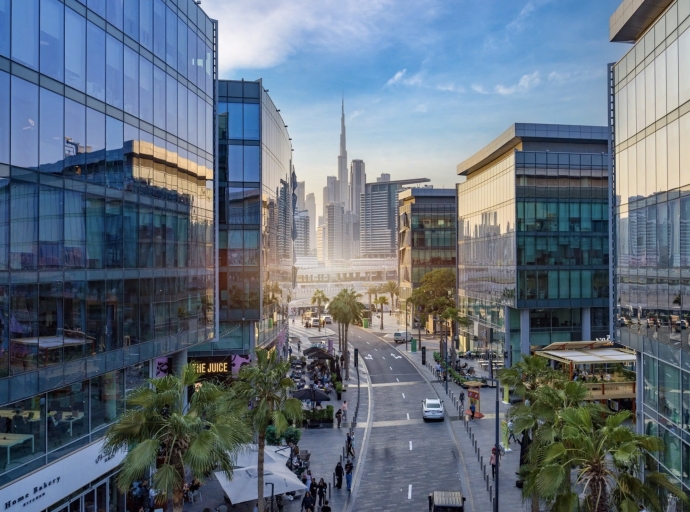
Rethinking the Urban Future: Dubai’s Commitment to 20-Minute City Living

Dubai has long been synonymous with architectural ambition, futuristic skylines, and bold urban planning. Now, with the city's embrace of the “20-Minute City” concept—introduced as part of the Dubai 2040 Urban Master Plan—the emirate is laying the groundwork for an urban future defined not just by scale, but by human-centric design.

The goal is clear: to ensure that 80% of residents can access their daily needs—work, school, healthcare, and leisure—within a 20-minute walk or bike ride. If achieved, this would mark a transformative shift from car-dependent sprawl toward integrated, sustainable living.

Implemented correctly, the 20-minute city model could redefine quality of life in the region. It promotes environmental sustainability through reduced emissions, supports small and local businesses, and fosters a greater sense of community. In a city where rapid growth has often outpaced public infrastructure, this policy represents a welcome recalibration.

But the promise lies not in rhetoric, but in execution. To succeed, the initiative must invest heavily in walkability, public transportation, shaded pedestrian corridors, and mixed-use zoning. Crucially, development must prioritize affordability to avoid creating a two-tiered system where only certain neighborhoods benefit.

As Dubai continues its journey toward becoming a global benchmark for livability, its leaders would do well to remember that a 20-minute city is not simply a planning goal—it is a social contract. One that must serve every resident.

Photo credits: Dubai Instagram

Image
Oksana Bozhko

Oksana Bozhko is a Contributor to Dubai Voice.

Rethinking the Urban Future: Dubai’s Commitment to 20-Minute City Living

A Cultural Milestone: Dubai’s Museum of the Future Is More Than a Spectacle

Since opening its doors in 2022, Dubai’s Museum of the Future has done more than capture the world's architectural imagination. It has positioned the emirate as a serious player in the global conversation around innovation, technology, and speculative thought. It is no small feat for a city often viewed through the prism of luxury and commerce.

Housed in an elliptical structure etched with Arabic calligraphy and dubbed “the most beautiful building on Earth” by His Highness Sheikh Mohammed bin Rashid Al Maktoum, the museum is not merely a monument to design—it is a forward-looking institution with a clear intellectual agenda.

Inside, the exhibits span topics such as artificial intelligence, space exploration, climate change, and bioengineering. Unlike traditional museums, it resists nostalgia. It is unapologetically focused on the decades to come, encouraging young visitors to envision themselves as participants in shaping the future.

More importantly, it reflects the UAE’s broader national priorities: investing in knowledge economies, fostering STEM education, and building a generation of thinkers, makers, and doers. The museum’s integration with schools and universities across the country underscores this vision.

Still, for such a bold project to realize its full potential, it must remain more than an attraction. The museum should evolve into a hub for research, cross-cultural dialogue, and policy incubation. This means hosting global scholars, publishing original research, and addressing the ethical dilemmas that accompany technological progress.

The Museum of the Future has already established itself as a landmark achievement in design and ambition. What remains is for it to deepen its role—as a catalyst for thought, a space for discovery, and a driver of meaningful innovation that serves not only the region, but the world.

Photo credits: Wikipedia 

Image
Oksana Bozhko

Oksana Bozhko is a Contributor to Dubai Voice.

A Cultural Milestone: Dubai’s Museum of the Future Is More Than a Spectacle

Giorgio Armani, Influential Fashion Designer With a Lasting Legacy in Dubai, Dies at 90

Giorgio Armani, the Italian designer who helped define modern fashion with his minimalist style and sharp tailoring, has died at the age of 90.

Armani rose to international prominence in the 1970s by introducing a softer, more relaxed approach to menswear, moving away from the stiff, structured jackets that had dominated for decades. His designs, often in neutral tones like navy, gray, black, and beige, became known for their clean lines and quiet elegance - qualities that appealed to both celebrities and professionals alike.

Beyond fashion, Armani played a significant role in shaping the global luxury market, including in the Middle East. In Dubai, his influence is most visible in the Armani Hotel, which occupies several floors of the Burj Khalifa. Opened in 2010, the hotel marked the designer’s first venture into hospitality and reflects his design philosophy of understated luxury. Armani-branded residences and retail stores across the city further extended his presence in the region.

Born in Piacenza, Italy, in 1934, Armani spent more than five decades building one of the most successful privately owned fashion empires in the world. He remained deeply involved in the business throughout his life, overseeing collections that spanned ready-to-wear, couture, and lifestyle products.

In Dubai and other global cities, Armani’s brand became a symbol of refined taste and modern design. His influence on fashion and design - both personal and commercial - continues through the Armani Group, which remains independent and under private ownership.

Photo credits: Wikipedia. Giorgio Armani

Image
Oksana Bozhko

Oksana Bozhko is a Contributor to Dubai Voice.

Giorgio Armani, Influential Fashion Designer With a Lasting Legacy in Dubai, Dies at 90

The Future of Retail is Here

Dubai’s malls have always been more than shopping venues - they’re social hubs, architectural statements, and economic engines. But now, the emirate is redefining retail with a focus on technology, sustainability, and experience.

The recently launched Dubai Mall Zabeel expansion integrates AI-driven logistics and smart parking. Meanwhile, the Mall of the Emirates is experimenting with AR and VR tech to create immersive shopping environments.

E-commerce surged post-2020, but Dubai’s malls bounced back stronger, evolving into hybrid retail-entertainment complexes. Places like City Walk, Bluewaters, and Boxpark reflect urban outdoor retail trends, emphasizing walkability and local boutiques.

Simultaneously, Expo City Dubai is being transformed into a smart city-scale innovation and retail testbed, blending sustainability with commerce - a blueprint for 21st-century shopping districts.

Photo credits: The Dubai Mall Zabeel 

Image
Oksana Bozhko

Oksana Bozhko is a Contributor to Dubai Voice.

The Future of Retail is Here

Education as a Strategic Asset: Dubai’s Learning Economy

Dubai is evolving into a global education hub, attracting international institutions and edtech investment to shape the region’s future workforce.

With Knowledge Park, Dubai International Academic City, and partnerships with global universities such as University of Birmingham, Heriot-Watt, and Rochester Institute of Technology, Dubai offers diverse programs from engineering to media studies.

In 2023, the UAE Ministry of Education announced reforms to integrate AI and climate studies into K-12 curriculums, preparing students for a rapidly shifting world. International schools in Dubai now rank among the best globally, with British, American, Indian, IB, and French curriculums widely available.

At the tertiary level, the focus on innovation, entrepreneurship, and future skills has created a knowledge-based economy parallel to oil revenues - mirroring the UAE's national diversification goals.

Photo credits: Dubai Knowledge Park 

Image
Oksana Bozhko

Oksana Bozhko is a Contributor to Dubai Voice.

Education as a Strategic Asset: Dubai’s Learning Economy

The Green Turn: Push Toward Urban Sustainability

Dubai is making a concrete commitment to environmental sustainability.

Under the Dubai 2040 Urban Master Plan, 60% of the city’s area will be nature reserves or parks. Already, projects like Dubai Creek Harbour, Sustainable City, and Expo City Dubai are setting benchmarks in carbon neutrality, walkability, and smart grid integration.

The Dubai Clean Energy Strategy 2050 aims for 100% clean energy sources by mid-century, spearheaded by the Mohammed bin Rashid Al Maktoum Solar Park, one of the world’s largest solar installations.

Dubai is also rolling out mandatory green building codes (Al Safat), and banning single-use plastics starting in 2024. These moves place the city at the forefront of eco-conscious urbanism in the Middle East.

Photo credits: Digital Dubai 

Image
Alexander Agafiev Macambira

Alexander Agafiev Macambira is former tech contributing writer for Forbes Monaco.

The Green Turn: Push Toward Urban Sustainability

Dubai’s Food Revolution: From Street Eats to Michelin Stars

Dubai has quietly transformed into one of the most vibrant culinary capitals of the world. Once dominated by international chains catering to business travelers, the city’s food scene now celebrates local Emirati flavors, immigrant cuisines, and world-renowned fine dining.

The arrival of the Michelin Guide in 2022 marked a pivotal shift. Restaurants like Ossiano, 11 Woodfire, and Tasca by José Avillez earned stars not only for excellence but for introducing global audiences to Dubai's gastronomic diversity.

Meanwhile, grassroots food culture flourishes in areas like Deira and Al Karama, where South Asian, Levantine, and Filipino flavors tell the story of the city’s multicultural backbone. Dubai Food Festival and Dubai Restaurant Week now draw tens of thousands, highlighting the emirate’s ambition to be more than a luxury dining stop - but a global culinary destination.

Photo credits: Atlantis Dubai

Image
Oksana Bozhko

Oksana Bozhko is a Contributor to Dubai Voice.

Dubai’s Food Revolution: From Street Eats to Michelin Stars

Rethinking Infrastructure: The Dubai Metro and Mobility Equity

When Dubai Metro launched in 2009, it became the world’s longest fully automated metro system at the time - now spanning 89.3 km with two lines and over 53 stations. 

Its reach into communities like Al Qusais, Jebel Ali, and now Expo City (formerly Expo 2020 site) has quietly redefined how the city breathes. It averages over 650,000 daily riders as of 2023, reflecting its vital role in reducing car dependence in a notoriously car-centric environment.

Yet challenges persist: low-income workers—especially in peripheral labor camps—remain underserved by last-mile connectivity. The expansion plans (including the proposed Blue Line, linking key suburbs) promise more integration, but also reveal lingering inequities in urban mobility.

In a city of towers, equity begins underground. The metro is not just transport - it’s public policy made steel.

Photo credits: Wikipedia


Image
Oksana Bozhko

Oksana Bozhko is a Contributor to Dubai Voice.


Rethinking Infrastructure: The Dubai Metro and Mobility Equity

Bluewaters and the Question of Engineered Communities

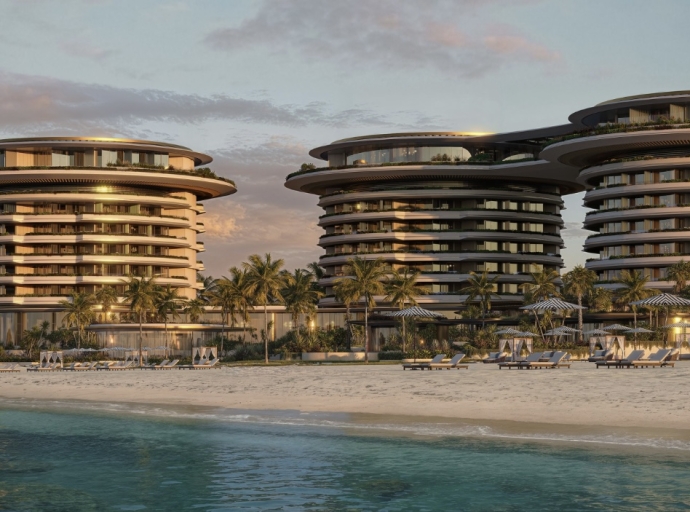
Launched in 2018, Bluewaters Island - home to Ain Dubai, the world’s tallest observation wheel at 250 meters—symbolizes a shift toward branded, engineered residential ecosystems. Developed by Meraas, Bluewaters is both a high-end destination and a residential experiment, with its 10 mid-rise buildings, beach clubs, and walkable districts entirely master-planned.

While it draws global comparisons to Miami’s South Beach or Singapore’s Sentosa, Bluewaters is more than a luxury enclave. It illustrates how Dubai is designing “livable enclaves” in place of organic neighborhoods. Public space, leisure, and private luxury are seamlessly integrated - but always curated.

The island’s success raises critical questions: Where is the line between urban design and urban control? When everything is manufactured, what space remains for unpredictability, for culture to emerge rather than be staged?

Bluewaters is Dubai’s most elegant paradox: a designed community in a city defined by engineered spectacle.

Photo credits: Blue Waters Dubai

Image
Alexander Agafiev Macambira

Alexander Agafiev Macambira is former tech contributing writer for Forbes Monaco.

Bluewaters and the Question of Engineered Communities

Tradition in Transition: The Ismaili Centre and Heritage Architecture

In a metropolis of glass and steel towers, the Ismaili Centre in Dubai stands apart for its embrace of tradition. Inspired by Fatimid architectural forms of Egypt and Syria, the Centre features a domed structure built with brick, wood, and craftsmanship from Kashmiri masons, employing rare artisanal techniques.

Its design philosophy underscores harmony, continuity, and mutual respect within society - an intentional counterbalance to the rapid modernity shaping Dubai. The Centre affirms that in a city of dizzying innovation, cultural rootedness still holds architectural and societal importance.

Photo credits: Wikipedia 

Image
Oksana Bozhko

Oksana Bozhko is a Contributor to Dubai Voice.

Tradition in Transition: The Ismaili Centre and Heritage Architecture

Dubai’s Skyline: Monument and Ambition in Neo‑Futurism

Dubai’s skyline stands as a testament to audacious urban ambition. Anchored by the Burj Khalifa, completed in 2009 and opened in 2010, the supertall skyscraper towers at 829.8 meters, holding the title of world’s tallest structure. Designed by Adrian Smith at Skidmore, Owings & Merrill, its bundled tube design—a proven innovation from Chicago—promotes both strength and elegance, setting a template for mega‑structures worldwide.

Beside such iconography, the Museum of the Future emerges as a cultural landmark. Crafted by Shaun Killa Design, it achieved LEED Platinum certification in 2023 and carries Arabic calligraphy quoting Sheikh Mohammed about innovation and creativity on its façade. This structure reflects Dubai’s architectural modernism aligned with sustainability.

These edifices reflect a deliberate narrative: architecture as civic statement. With each curve, spire, and diagrid, Dubai repositions itself from a regional capital to a global crucible of design, innovation, and spectacle.

Photo credits: Dubai Instagram

Image
Oksana Bozhko

Oksana Bozhko is a Contributor to Dubai Voice.

Dubai’s Skyline: Monument and Ambition in Neo‑Futurism
HELP
PARTNERSHIPS
Image