

18.96°C

News

All Stories

Dubai’s Vision 2040: Shaping the Future of Urban Living

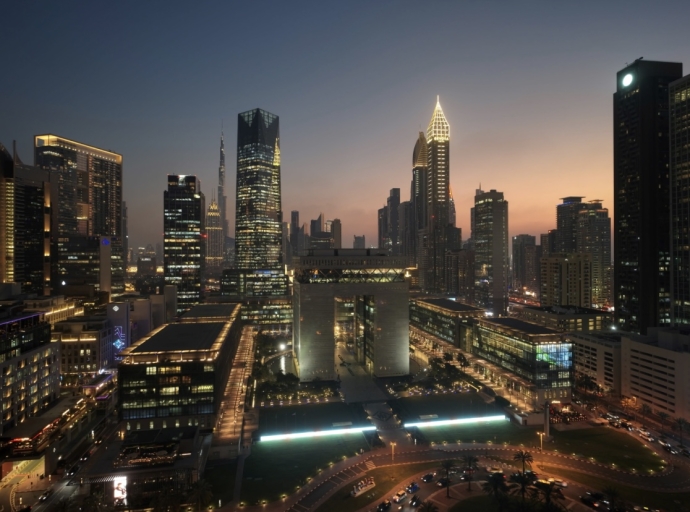
Dubai’s ambitious Vision 2040 Urban Master Plan, unveiled in March 2021, charts a comprehensive roadmap for the emirate’s evolution over the next two decades. With a clear focus on sustainability, livability, and economic diversification, the plan aims to transform Dubai into a global city that balances growth with environmental stewardship and quality of life.

At the heart of Vision 2040 is a commitment to sustainable urban development. The plan seeks to double the area of green and recreational spaces, dedicating 60 percent of Dubai’s land to nature reserves and rural areas. This will not only preserve biodiversity but also combat urban heat and provide residents with accessible natural environments, a crucial step for a desert metropolis confronting climate challenges.

To reduce congestion and promote balanced development, the strategy identifies five major urban centers—Deira/Bur Dubai as the historic and cultural hub; Downtown/Jumeirah for tourism and retail; Sheikh Zayed Road as the global business district; the Expo 2020 district serving as an innovation and events focal point; and Dubai Silicon Oasis as the technology and knowledge center. These nodes will be interconnected through an integrated public transport network designed to place 55 percent of residents within 800 meters of transit stations by 2040.

Complementing this is the “20-minute city” concept, which envisions essential services, including education, healthcare, and leisure, to be accessible within a 20-minute walk or bike ride. Land allocation for tourism and commercial use will increase significantly—by 134 and 168 square kilometers respectively—supporting economic diversification beyond oil and reinforcing Dubai’s status as a global hub.

Importantly, the plan also safeguards Dubai’s cultural heritage by revitalizing historic districts like Deira and Bur Dubai. This approach ensures that while Dubai embraces modern infrastructure and innovation, it retains the rich identity that underpins its unique appeal.

In sum, Dubai’s Vision 2040 is a forward-looking blueprint that reconciles rapid urban growth with sustainability and cultural preservation. By implementing these goals, Dubai aims to offer its residents an improved quality of life, attract international investment, and maintain its position as a competitive, resilient global city.

Photo credits: Dubai Instagram. 

Image
Alexander Agafiev Macambira

Alexander Agafiev Macambira is former tech contributing writer for Forbes Monaco.

Dubai’s Vision 2040: Shaping the Future of Urban Living

The Science Behind Dubai’s Artificial Islands

Once a quiet stretch of desert coast, Dubai’s shoreline now curves around some of the most ambitious artificial landforms ever constructed: the iconic Palm Jumeirah and the surreal archipelago of The World Islands. These man-made marvels have not only redefined urban planning but also challenged the limits of modern engineering and environmental science.

Building from the Sea

Construction of the Palm Jumeirah began in 2001, led by Dubai-based developer Nakheel and executed by Dutch dredging companies Van Oord and Boskalis. Instead of using concrete or steel, engineers relied on a process called land reclamation, which involves dredging sand from the sea floor and spraying it into place using GPS-guided ships—a technique known as rainbowing.

Palm Jumeirah contains around 94 million cubic meters of sand and 7 million tons of rock. Its structure includes a 4 km-long trunk, 17 fronds lined with villas, and a crescent-shaped breakwater designed to absorb wave energy and protect the interior lagoon. To stabilize the sand, engineers used a method called vibro-compaction, which vibrates the ground to increase its density. 

The World Islands project, located 4 km offshore, began in 2003. The development consists of about 300 small islands shaped to resemble a map of the world. More than 321 million cubic meters of sand and 386 million tons of rock were used to create the archipelago, which spans 9 kilometers in width and is enclosed by a crescent-shaped breakwater. 

Environmental Consequences

While visually striking, these developments have not come without ecological cost. The dredging process buried coral reefs and disrupted local marine ecosystems. Fine sediment suspended in the water—known as turbidity—reduced sunlight penetration, threatening seagrass beds and oyster habitats essential to marine biodiversity.

Moreover, the artificial islands altered natural coastal currents. This led to coastal erosion in some nearby areas and stagnant water zones in others, increasing the risk of algal blooms and oxygen depletion. According to environmental assessments, such disruptions posed long-term threats to marine life along Dubai’s coast. 

Engineering vs. Ecology

Dubai authorities have responded to these concerns with a mix of marine restoration and sustainable planning. Artificial reefs have been deployed around Palm Jumeirah to reintroduce marine habitats, while regulations on dredging and coastal development have become more stringent. Recent development proposals also emphasize climate resilience, seeking a better balance between innovation and environmental responsibility. 

Dubai’s artificial islands remain a testament to human ambition and ingenuity. But as climate challenges mount, the next chapter in the emirate’s coastal evolution may depend not only on what we build—but how we build it.

Photo credits: Earth Observatory NASA.

Image
Alexander Agafiev Macambira

Alexander Agafiev Macambira is former tech contributing writer for Forbes Monaco.

The Science Behind Dubai’s Artificial Islands

Trèsind Studio & Avatāra: Plating Elevated to Visual Poetry

Two Michelin‑recommended venues where presentation is art.

Trèsind Studio

Located at One&Only Royal Mirage, Trèsind Studio has built its reputation on a 16-course tasting menu described by The World’s 50 Best Restaurants as a visual and gastronomic tour of India. Signature creations—like the blossom chaat with pumpkin mash, yogurt, chutneys, edible flowers and crisp butterflies—are composed with meticulous symmetry on vivid crockery, each course curated like a miniature installation.

Photo credits: Trèsind Studio Instagram. 

Avatāra

This new fine‑dining vegetarian concept in Dubai Hills Estate is led by Chef Rahul Rana. Avatāra’s presentation emphasizes vibrant vegetable curries and appetizers, artfully plated with microgreens, edible flowers, and puree swirls that foreground the natural beauty of plant‑based ingredients.

The visual language here champions color, balance, and harmony—each plate assembled as a visual composition.

Photo credits: Avatāra.

Image
Alexander Agafiev Macambira

Alexander Agafiev Macambira is former tech contributing writer for Forbes Monaco.

Trèsind Studio & Avatāra: Plating Elevated to Visual Poetry

Seven Paintings: An Immersive Gastronomic Masterpiece in Dubai

Situated within the Hyde Hotel in Business Bay, Seven Paintings offers a dining experience where plating transcends presentation—it becomes performance art. Conceived by Nadine Beshir of Dinner Time Story and Chef Omar Sartawi (with executive chef Daniel Shepherd), the two-hour, seven-course dinner marries culinary innovation with visual storytelling inspired by legends like Van Gogh, Picasso, Dali and Banksy.  

Upon entering, guests encounter a theatrical dining space: a circular table set against a large black canvas, digital projections enliven each course and invite participation—such as painting on chocolate or adding “tears” from a dropper bottle to a plate. The result is a playful yet precise narrative woven between art and cuisine.  

Chef Sartawi’s plating echoes the featured artists: bold colors, abstract arrangements and interactive elements. One course channels Jackson Pollock, as diners splatter salad dressings in jazz-fueled abstraction, while others reinterpret visual art into taste and texture.   

At approximately AED 450 per person, the experience is intimate—seating is limited to 20 guests per sitting, each served with matching theatrical flair.  

Seven Paintings distinguishes itself in the competitive Dubai dining landscape not by opulence, but by its fusion of immersive theater and precise gastronomy—a celebration of how food can become art.

Photo credits: Get Your Guide.

Image
Oksana Bozhko

Oksana Bozhko is a Contributor to Dubai Voice.

Seven Paintings: An Immersive Gastronomic Masterpiece in Dubai

From Sand to Sky: Inside the World’s Most Exclusive Desert Retreat

In a city synonymous with hypermodern architecture and luxury skyscrapers, a different kind of opulence lies 45 minutes outside the city center—discreet, remote, and unmistakably exclusive. Al Maha, a Luxury Collection Desert Resort & Spa, occupies a protected corner of the Dubai Desert Conservation Reserve and offers a vision of solitude that few places in the Emirates can claim.

Set against an ochre-hued backdrop of sand dunes and Arabian oryx, Al Maha is not just a five-star resort—it is one of the region’s most carefully preserved experiences of the natural desert environment. The property comprises only 42 private suites, each styled after Bedouin architecture with handcrafted wood furnishings, panoramic views, and private temperature-controlled pools.

Privacy here is absolute. Guests are driven directly to their suites via winding paths that ensure near-total seclusion. There are no high-rises, no infinity-edge Instagram setups—only the sound of wind sweeping across the dunes. The only visible light at night is the soft glow of lanterns and the occasional movement of desert wildlife.

Yet isolation does not preclude refinement. Inside, the suites include custom-embroidered linens, curated antique Arabian artifacts, and floor-to-ceiling glass walls. The resort’s main restaurant, Al Diwaan, serves seasonal menus based on local ingredients, including Emirati-inspired dishes prepared with five-star precision.

What separates Al Maha from newer luxury desert retreats like Terra Solis or Sonara Camp is its strict conservation policy. As part of the protected Dubai Desert Conservation Reserve, the resort operates under sustainability mandates that include low-impact architecture, conservation-driven animal management, and water recycling systems. Al Maha contributes directly to the protection of over 70 plant and animal species, including the endangered Gordon’s wildcat and the Arabian sand gazelle.

Rates begin at around AED 4,000 per night, often rising significantly during peak months, and include two desert activities per day—falconry, horseback riding, dune driving, or nature walks with guides trained in desert ecology. The guest list is discreet but includes diplomats, designers, and a global clientele seeking silence over spectacle.

In a city built on engineering marvels and record-breaking towers, Al Maha stands apart not by defying the desert, but by disappearing into it.

Photo credits: Al Maha Desert Resort & Spa Dubai.

Image
Oksana Bozhko

Oksana Bozhko is a Contributor to Dubai Voice.

From Sand to Sky: Inside the World’s Most Exclusive Desert Retreat

The Hidden Gardens of Dubai: Where Nature Thrives in the Urban Jungle

Dubai is known for its glass towers, man-made islands, and desert backdrop. Yet tucked among its highways and high-rises are green spaces—both planned and unexpected—that offer a quieter counterpoint to the city's relentless pace.

One of the city’s oldest parks, Safa Park, sits just off Sheikh Zayed Road. Opened in 1975, the 64-hectare park includes lawns, a lake, and shaded paths frequented by joggers and picnickers. Despite its proximity to downtown, it maintains a slower rhythm. A view of the Burj Khalifa rises beyond the trees—a reminder of how nature and concrete exist side by side.

In Al Barsha, another green escape unfolds around a large man-made pond. Al Barsha Pond Park provides a wide jogging track, basketball courts, and landscaped gardens. Families gather on weekends for cycling and paddle boat rides. The park’s design favors functionality and accessibility over grandeur.

A more expansive and less manicured space lies at Mushrif Park, near Mirdif. Covering 13 square kilometers, the park features native Ghaf trees, bike trails, and an international village with miniature houses representing global architecture. Its remote location means it is less crowded than other urban parks, drawing those who want space and quiet.

For those seeking something curated and eco-conscious, Al Barari—an upscale residential area—offers an unusual mix of private villas and public botanical landscaping. Over 500 plant species are integrated into community walkways, small lakes, and shaded rest areas. Its development was pitched as a model of sustainable living, with an emphasis on biodiversity.

Farther afield, the Al Qudra Oasis and Love Lake sit within the Al Marmoom Desert Conservation Reserve. Established in 2018, this protected zone is one of the largest in the UAE, home to over 200 species of birds. The heart-shaped twin lakes and desert trails are popular with campers and birdwatchers. Unlike much of Dubai’s urban core, this area limits commercial development, preserving a sense of isolation.

Closer to the center, Ras Al Khor Wildlife Sanctuary presents a different kind of green space—wetlands. Just off Dubai Creek, the reserve is home to thousands of flamingos during winter, along with herons, osprey, and crabs. Bird hides are accessible to the public, and entry is free. Few global cities offer protected wetlands within view of the skyline.

In more localized settings, smaller gardens are emerging in creative spaces. At Alserkal Avenue, rooftop gardens maintained by cultural institutions serve as quiet green areas during events and workshops. In Al Fahidi and Al Seef, traditional wind-tower houses now include rooftop terraces with potted palms and native herbs. These gardens are informal, but increasingly valued in older neighborhoods undergoing restoration.

Together, these spaces form a mosaic of green in a city better known for excess. They are not accidental. Under the Dubai 2040 Urban Master Plan, 60% of the emirate’s area is set aside for nature reserves and parks. These places serve more than recreation—they support urban cooling, protect biodiversity, and offer psychological relief in an environment often defined by speed.

Dubai’s hidden gardens do not compete with its skyline. Instead, they quietly challenge it—reminding residents and visitors that urban life and ecological awareness can coexist.

Photo credits: Visit Dubai. Safa Park. 

Image
Oksana Bozhko

Oksana Bozhko is a Contributor to Dubai Voice.

The Hidden Gardens of Dubai: Where Nature Thrives in the Urban Jungle

Muna Al Gurg: Architect of Cultural Institutions and Women’s Empowerment

Few figures embody the intersection of business acumen, cultural stewardship, and philanthropy like Muna Easa Al Gurg. As Vice Chairperson and Director of Retail at the prominent Easa Saleh Al Gurg Group, she commands one of the UAE’s most influential family conglomerates while simultaneously steering key cultural institutions shaping Dubai’s heritage narrative.

In 2017, Al Gurg was appointed Managing Director of the Dubai Museums Company, a pivotal role overseeing world-class sites such as the Etihad Museum, Al Shindagha heritage district, and the futuristic Museum of the Future. Under her leadership, these venues have not only attracted millions of visitors but also fostered a renewed public engagement with Emirati history, innovation, and identity. 

An avid art collector and patron, Al Gurg is a regular speaker at international platforms like Art Dubai, where she champions regional artists and promotes cultural dialogue between the Middle East and the world. Her efforts through the Meem Foundation and scholarship programs at institutions like the London Business School emphasize female entrepreneurship and economic inclusion, reflecting her dedication to expanding women’s roles in all sectors.

Her multifaceted leadership—spanning retail, museums, art, and education—illustrates how Dubai’s cultural renaissance is driven by visionary women who combine heritage preservation with forward-thinking innovation.

Photo credits: Wikipedia. Muna Al Gurg. 

Image
Oksana Bozhko

Oksana Bozhko is a Contributor to Dubai Voice.


Muna Al Gurg: Architect of Cultural Institutions and Women’s Empowerment
HELP
PARTNERSHIPS
Monaco Voice
Monaco Voice

Image