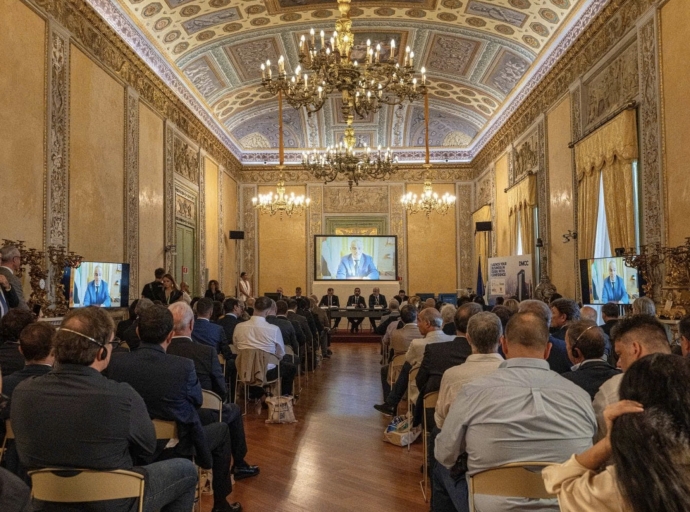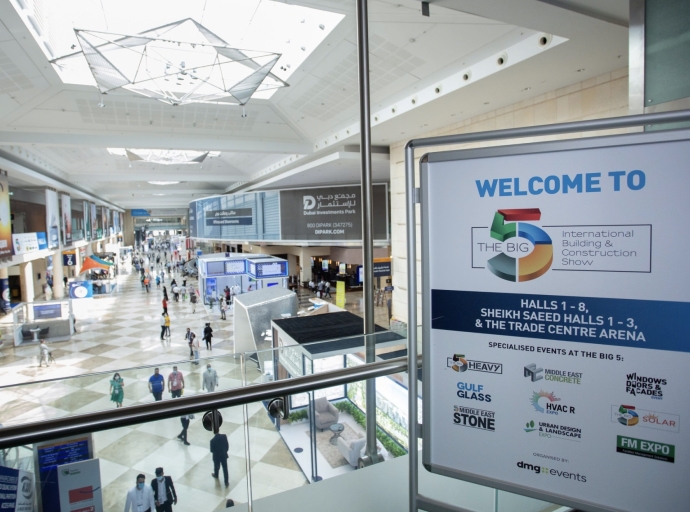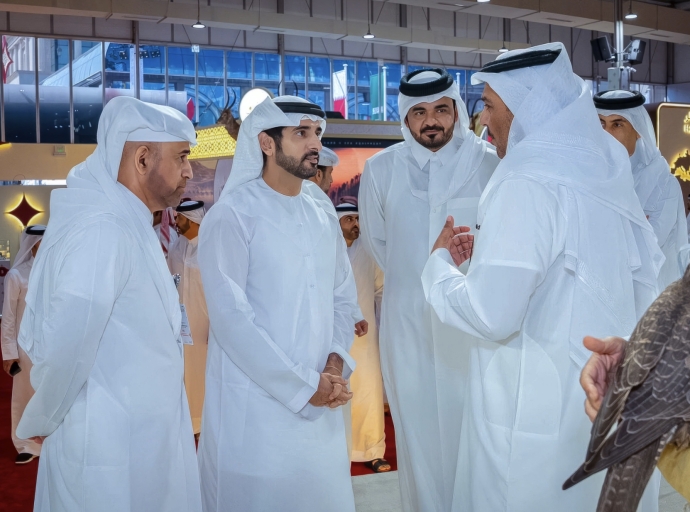


The second day of the 27th General Conference of the International Council of Museums (ICOM Dubai 2025) brought together cultural leaders at the Dubai World Trade Centre for focused discussions on how museums can respond to rapid global...
The Monegasque™ magazine features original articles from heads of state, heirs, and global leaders across diverse fields.
In the article “My Champion’s Creed,” Evander Holyfield outlines the core principles that shaped his boxing career and life. From his earliest days in the ring, Holyfield credits three fundamental lessons taught by his mother: the importance of listening, following directions, and perseverance. These tenets provided the foundation for his resilience, particularly when confronting early setbacks in boxing. He recalls his mother’s counsel: «changing paths is a choice to be made in the light of success, not under the cloud of defeat».
Holyfield applies this philosophy beyond boxing, emphasizing the necessity of commitment to one’s pursuits and distinguishing transient interests from enduring ones. He highlights the strategic dimension of boxing, shaped by a coach who stressed the art of “striking without being struck,” underscoring the balance between offense and defense.
His personal code developed into a commitment to honesty and self-awareness, which became essential to his discipline and training. Holyfield maintains a rigorous standard: to accept defeat only when he has performed at his best. Central to his creed is also faith, saying “prayers avert adversities”.
Holyfield’s article reflects a life shaped by enduring values of resilience, integrity, and faith.
More from The Monegasque™ contributors can be found at monegasque.com
Vladyslava Garkusha
Vladyslava Garkusha is an Actress, TV Host, Model, and Editor-at-Large of Dubai Voice. The People, Dubai, World and Global Perspective.
In a publication where world leaders, royals, and cultural icons speak in their own words, The Monegasque™ has carved a unique place in international media. Its editorial philosophy rejects third-person narratives in favor of first-hand accounts, offering readers direct access to figures who have shaped history and continue to influence global affairs. In its latest issue, Joe Foster - co-founder of Reebok - joins this chorus of singular voices.
Foster’s article, Thinking Outside the Shoebox, is the first in a two-part series that traces the creation of one of the most recognizable brands in athletic wear. His story, spanning three generations, offers a rare look into the making of Reebok, from a small workshop in Bolton, England, to its rise as the world’s top sports brand by the late 1980s.
The Foster family's roots in sports footwear stretch back to 1895, when Joe’s grandfather, J.W. Foster, developed some of the earliest spiked running shoes. These innovations helped British athletes claim Olympic gold in 1924, feats later dramatized in Chariots of Fire. Yet, as Foster recounts, success in one generation did not guarantee continuity. By the 1950s, J.W. Foster & Sons was faltering under fractured leadership.
Joe and his brother Jeff left the family business in 1958 to start anew. With little capital but a clear sense of purpose, they founded what would eventually become Reebok. The original name, Mercury Sports Footwear, had to be abandoned due to a trademark conflict. The brothers submitted a list of alternatives to their agent; “Reebok,” a name Joe pulled from an American dictionary, was their preferred choice. They secured the name - and a brand was born.
Over the next decade, the brothers refined their product line and sought a foothold in the U.S. market. Foster’s account details six failed attempts to secure an American distributor. Persistence paid off. In 1979, a distributor in Boston agreed to take on Reebok. Within two years, the company had caught the attention of the U.S. running market.
Then came the turning point: aerobics. Reebok’s “Freestyle” model, designed specifically for women, transcended fitness to become a fashion staple. Hollywood figures adopted the shoes, accelerating their visibility. Demand exploded. Between 1983 and 1987, Reebok’s revenue climbed from $9 million to $900 million, overtaking Adidas and Nike to become the global leader in athletic footwear.
Joe Foster now lives in Tenerife. He is the author of Shoemaker and serves as Reebok’s ambassador as well as Chairman of LetsLocalise. His story, told in The Monegasque™, reflects the strategic decisions and persistence behind Reebok’s global rise.
More from The Monegasque™ contributors can be found at monegasque.com
Vladyslava Garkusha
Vladyslava Garkusha is an Actress, TV Host, Model, and Editor-at-Large of Dubai Voice. The People, Dubai, World and Global Perspective.
Amid a media landscape, The Monegasque™ magazine, a Monaco-based publication, distinguishes itself by offering public figures a platform to speak in their own voice. The magazine forgoes the usual filter of journalists, opting instead to publish first-person essays from individuals who are typically more seen than heard. The result is a publication where cultural figures, athletes, and descendants of dynasties do something increasingly rare: they write.
Among the contributors is Brazilian Formula One driver Bruno Senna, nephew of the late Ayrton Senna, who shares his story in the article 'The Magic of Senna: Continuing My Uncle’s Legacy in Monaco.'
Bruno Senna was born in São Paulo in 1983. His earliest memories, he writes, are of karting, engines, and helmeted heroes - chief among them, his uncle Ayrton, a three-time Formula One World Champion and six-time winner at Monaco. After Ayrton’s fatal crash at Imola in 1994 and the later death of Bruno’s father, any early aspirations toward racing were put on pause.
It wasn’t until the encouragement of his mother, Viviane Senna, and family friend Gerhard Berger, that the younger Senna returned to motorsport. He entered Formula One in 2010 with Hispania Racing and later raced for Renault and Williams. His best result came at the 2011 Canadian Grand Prix, where he finished eighth.
In 2010, Senna moved to Monaco. The Principality, long a hub for Formula One drivers, offered proximity to racing circuits, the same streets where his uncle had built much of his reputation.
That same year, Senna won the GP2 Feature Race in Monaco, putting the family name atop a Monte Carlo leaderboard for the first time since 1993.
Senna’s essay in The Monegasque™ is personal. He reflects on life in Monaco beyond the paddock: meeting his wife, raising a daughter, and working with the Princess Charlene of Monaco Foundation. There are no grand statements - just a steady accounting of life lived forward, with the past never far behind.
The Monegasque™ itself has published original contributions from Jermaine Jackson, Evander Holyfield, H.R.H. Prince Michel of Yugoslavia, and Archduke Carl-Christian of Austria. Other contributors include Joe Foster, co-founder of Reebok; Alberto Repossi, the jeweler; Chico Bouchikhi, co-founder of the Gipsy Kings; artist Laura Chaplin, the granddaughter of Charlie Chaplin; and Formula One’s rising driver Oscar Piastri.
The magazine’s editorial philosophy is simple: let the people who’ve lived the story tell it. For Bruno Senna, that means stepping out of the shadow of a surname long immortalized in racing history - not by distancing from it, but by continuing it with precision, patience, and his own words.
More from The Monegasque™ contributors can be found at monegasque.com
Vladyslava Garkusha
Vladyslava Garkusha is an Actress, TV Host, Model, and Editor-at-Large of Dubai Voice. The People, Dubai, World and Global Perspective.
Two Michelin‑recommended venues where presentation is art.
Trèsind Studio
Located at One&Only Royal Mirage, Trèsind Studio has built its reputation on a 16-course tasting menu described by The World’s 50 Best Restaurants as a visual and gastronomic tour of India. Signature creations—like the blossom chaat with pumpkin mash, yogurt, chutneys, edible flowers and crisp butterflies—are composed with meticulous symmetry on vivid crockery, each course curated like a miniature installation.
Photo credits: Trèsind Studio Instagram.
Avatāra
This new fine‑dining vegetarian concept in Dubai Hills Estate is led by Chef Rahul Rana. Avatāra’s presentation emphasizes vibrant vegetable curries and appetizers, artfully plated with microgreens, edible flowers, and puree swirls that foreground the natural beauty of plant‑based ingredients.
The visual language here champions color, balance, and harmony—each plate assembled as a visual composition.
Photo credits: Avatāra.
Alexander Agafiev
Alexander Agafiev is former tech contributing writer for Forbes Monaco.
Situated within the Hyde Hotel in Business Bay, Seven Paintings offers a dining experience where plating transcends presentation—it becomes performance art. Conceived by Nadine Beshir of Dinner Time Story and Chef Omar Sartawi (with executive chef Daniel Shepherd), the two-hour, seven-course dinner marries culinary innovation with visual storytelling inspired by legends like Van Gogh, Picasso, Dali and Banksy.
Upon entering, guests encounter a theatrical dining space: a circular table set against a large black canvas, digital projections enliven each course and invite participation—such as painting on chocolate or adding “tears” from a dropper bottle to a plate. The result is a playful yet precise narrative woven between art and cuisine.
Chef Sartawi’s plating echoes the featured artists: bold colors, abstract arrangements and interactive elements. One course channels Jackson Pollock, as diners splatter salad dressings in jazz-fueled abstraction, while others reinterpret visual art into taste and texture.
At approximately AED 450 per person, the experience is intimate—seating is limited to 20 guests per sitting, each served with matching theatrical flair.
Seven Paintings distinguishes itself in the competitive Dubai dining landscape not by opulence, but by its fusion of immersive theater and precise gastronomy—a celebration of how food can become art.
In a city synonymous with hypermodern architecture and luxury skyscrapers, a different kind of opulence lies 45 minutes outside the city center—discreet, remote, and unmistakably exclusive. Al Maha, a Luxury Collection Desert Resort & Spa, occupies a protected corner of the Dubai Desert Conservation Reserve and offers a vision of solitude that few places in the Emirates can claim.
Set against an ochre-hued backdrop of sand dunes and Arabian oryx, Al Maha is not just a five-star resort—it is one of the region’s most carefully preserved experiences of the natural desert environment. The property comprises only 42 private suites, each styled after Bedouin architecture with handcrafted wood furnishings, panoramic views, and private temperature-controlled pools.
Privacy here is absolute. Guests are driven directly to their suites via winding paths that ensure near-total seclusion. There are no high-rises, no infinity-edge Instagram setups—only the sound of wind sweeping across the dunes. The only visible light at night is the soft glow of lanterns and the occasional movement of desert wildlife.
Yet isolation does not preclude refinement. Inside, the suites include custom-embroidered linens, curated antique Arabian artifacts, and floor-to-ceiling glass walls. The resort’s main restaurant, Al Diwaan, serves seasonal menus based on local ingredients, including Emirati-inspired dishes prepared with five-star precision.
What separates Al Maha from newer luxury desert retreats like Terra Solis or Sonara Camp is its strict conservation policy. As part of the protected Dubai Desert Conservation Reserve, the resort operates under sustainability mandates that include low-impact architecture, conservation-driven animal management, and water recycling systems. Al Maha contributes directly to the protection of over 70 plant and animal species, including the endangered Gordon’s wildcat and the Arabian sand gazelle.
Rates begin at around AED 4,000 per night, often rising significantly during peak months, and include two desert activities per day—falconry, horseback riding, dune driving, or nature walks with guides trained in desert ecology. The guest list is discreet but includes diplomats, designers, and a global clientele seeking silence over spectacle.
In a city built on engineering marvels and record-breaking towers, Al Maha stands apart not by defying the desert, but by disappearing into it.
Dubai is known for its glass towers, man-made islands, and desert backdrop. Yet tucked among its highways and high-rises are green spaces—both planned and unexpected—that offer a quieter counterpoint to the city's relentless pace.
One of the city’s oldest parks, Safa Park, sits just off Sheikh Zayed Road. Opened in 1975, the 64-hectare park includes lawns, a lake, and shaded paths frequented by joggers and picnickers. Despite its proximity to downtown, it maintains a slower rhythm. A view of the Burj Khalifa rises beyond the trees—a reminder of how nature and concrete exist side by side.
In Al Barsha, another green escape unfolds around a large man-made pond. Al Barsha Pond Park provides a wide jogging track, basketball courts, and landscaped gardens. Families gather on weekends for cycling and paddle boat rides. The park’s design favors functionality and accessibility over grandeur.
A more expansive and less manicured space lies at Mushrif Park, near Mirdif. Covering 13 square kilometers, the park features native Ghaf trees, bike trails, and an international village with miniature houses representing global architecture. Its remote location means it is less crowded than other urban parks, drawing those who want space and quiet.
For those seeking something curated and eco-conscious, Al Barari—an upscale residential area—offers an unusual mix of private villas and public botanical landscaping. Over 500 plant species are integrated into community walkways, small lakes, and shaded rest areas. Its development was pitched as a model of sustainable living, with an emphasis on biodiversity.
Farther afield, the Al Qudra Oasis and Love Lake sit within the Al Marmoom Desert Conservation Reserve. Established in 2018, this protected zone is one of the largest in the UAE, home to over 200 species of birds. The heart-shaped twin lakes and desert trails are popular with campers and birdwatchers. Unlike much of Dubai’s urban core, this area limits commercial development, preserving a sense of isolation.
Closer to the center, Ras Al Khor Wildlife Sanctuary presents a different kind of green space—wetlands. Just off Dubai Creek, the reserve is home to thousands of flamingos during winter, along with herons, osprey, and crabs. Bird hides are accessible to the public, and entry is free. Few global cities offer protected wetlands within view of the skyline.
In more localized settings, smaller gardens are emerging in creative spaces. At Alserkal Avenue, rooftop gardens maintained by cultural institutions serve as quiet green areas during events and workshops. In Al Fahidi and Al Seef, traditional wind-tower houses now include rooftop terraces with potted palms and native herbs. These gardens are informal, but increasingly valued in older neighborhoods undergoing restoration.
Together, these spaces form a mosaic of green in a city better known for excess. They are not accidental. Under the Dubai 2040 Urban Master Plan, 60% of the emirate’s area is set aside for nature reserves and parks. These places serve more than recreation—they support urban cooling, protect biodiversity, and offer psychological relief in an environment often defined by speed.
Dubai’s hidden gardens do not compete with its skyline. Instead, they quietly challenge it—reminding residents and visitors that urban life and ecological awareness can coexist.
Few figures embody the intersection of business acumen, cultural stewardship, and philanthropy like Muna Easa Al Gurg. As Vice Chairperson and Director of Retail at the prominent Easa Saleh Al Gurg Group, she commands one of the UAE’s most influential family conglomerates while simultaneously steering key cultural institutions shaping Dubai’s heritage narrative.
In 2017, Al Gurg was appointed Managing Director of the Dubai Museums Company, a pivotal role overseeing world-class sites such as the Etihad Museum, Al Shindagha heritage district, and the futuristic Museum of the Future. Under her leadership, these venues have not only attracted millions of visitors but also fostered a renewed public engagement with Emirati history, innovation, and identity.
An avid art collector and patron, Al Gurg is a regular speaker at international platforms like Art Dubai, where she champions regional artists and promotes cultural dialogue between the Middle East and the world. Her efforts through the Meem Foundation and scholarship programs at institutions like the London Business School emphasize female entrepreneurship and economic inclusion, reflecting her dedication to expanding women’s roles in all sectors.
Her multifaceted leadership—spanning retail, museums, art, and education—illustrates how Dubai’s cultural renaissance is driven by visionary women who combine heritage preservation with forward-thinking innovation.
Elham Al Qasimi is a name synonymous with firsts and fearless determination. Born in 1982, she shattered cultural expectations and physical barriers by becoming the first Arab woman and first Emirati to reach the North Pole in April 2010, completing the expedition unsupported and unassisted—a feat demanding extraordinary endurance, resilience, and preparation.
Al Qasimi’s journey began with rigorous physical training and mental conditioning, reflecting a mindset forged in Dubai’s transforming social landscape. Her achievement not only put Emirati women on the global adventure map but also challenged prevailing narratives about gender roles in the region. It positioned her as a beacon of possibility and empowerment for young women eager to transcend traditional boundaries.
Beyond exploration, Elham combines her passion with academic rigor. She holds an MSc from the London School of Economics in NGO management, underscoring a commitment to social impact and leadership. Though not a visual artist or designer, her story resonates deeply within Dubai’s creative renaissance, symbolizing courage, innovation, and the pursuit of excellence.
Al Qasimi continues to inspire through speaking engagements, advocating for youth empowerment and climate awareness. Her blend of daring adventure and intellectual engagement embodies the spirit of a new generation of Emirati women who are reshaping what it means to lead—whether in art, science, or social change.
At the forefront of Dubai’s creative renaissance stands Rania Naffa, Director of Tashkeel Dubai, the acclaimed arts organization dedicated to supporting and incubating the region’s emerging design talents. Founded in 2008 by Her Highness Lateefa bint Maktoum, Tashkeel is more than a creative space—it is an engine for cultivating a distinct Emirati and Gulf design identity in a rapidly globalizing world.
Under Naffa’s leadership, the flagship program Tanween has expanded its reach, commissioning local artists and designers to transform inspirations drawn from the UAE’s natural and cultural heritage—such as desert architecture, traditional weaving patterns, and native flora—into innovative products and installations. Tanween’s initiatives have garnered international recognition, with several commissions exhibited at Dubai Design Week and selected for global design fairs in Milan and London. This emphasis on regional narratives within contemporary design marks a significant shift from replication toward authentic creative authorship.
Beyond product design, Tashkeel engages in Arabic calligraphy workshops, critical design discourse, and mentorship programs, aiming to build cultural infrastructure within Al Quoz’s arts district and empower emerging practitioners. Naffa’s vision fosters a sustainable creative ecosystem where artists gain business acumen, technical skills, and international exposure. The organization’s educational programs also reach youth across the UAE, nurturing creative confidence as a national priority.
Tashkeel’s impact under Rania Naffa’s stewardship is palpable in Dubai’s evolving design landscape: it bridges the gap between tradition and innovation, providing a platform where local creatives can tell their own stories with sophistication and global resonance.
In a city defined by excess and innovation, the arrival of the Rimac Nevera in Dubai marks more than the introduction of a new hypercar—it signals a new era in ultra-luxury mobility. Officially launched in the UAE by Al Habtoor Motors in 2024, the Nevera is the world’s fastest street-legal electric vehicle, and perhaps the most radical redefinition of what speed, power, and sustainability can look like on the desert roads.
With a 1,914 horsepower quad-motor setup and a top speed of 412 km/h (256 mph), the Nevera accelerates from 0 to 100 km/h in just 1.81 seconds. It’s not merely theoretical: the car shattered 23 world performance records in a single day in 2023, including the fastest quarter-mile (8.25 seconds), 0–400–0 km/h (29.94 seconds), and Nürburgring electric lap record (7:05.298). These feats establish Rimac as not just a disruptor, but a leader among high-performance automakers.
But the Nevera’s appeal in Dubai goes beyond raw numbers. Its body is sculpted entirely from carbon fiber, with an adaptive aerodynamic system and a battery pack integrated into its core structure for both efficiency and rigidity. Only 150 units of the Nevera will be built globally, each priced at over $2.1 million. Some models arriving in Dubai have been ordered with bespoke paint schemes, personalized battery tuning, and AI-assisted digital displays—placing the Nevera squarely in the realm of collector-grade engineering.
Dubai’s Al Habtoor Motors, appointed as Rimac’s exclusive UAE distributor, now hosts the region’s first dedicated Rimac showroom. Designed to cater to a new generation of EV-forward collectors, it offers fully digital car configuration, luxury delivery services, and direct support from Rimac’s technical team. Though initial deliveries in the UAE remain limited, interest is rising as high-net-worth buyers increasingly view EV performance as a worthy successor to V12 combustion grandeur.
In 2025, Rimac introduced the Nevera R, a track-focused upgrade with 2,107 hp and upgraded chassis, braking, and aerodynamics—capable of accelerating from 0 to 60 mph in 1.66 seconds and topping out at 432 km/h (268 mph). While production remains ultra-limited, the Nevera R represents the brand’s push into circuit culture, even while remaining fully road legal.
Unlike many hypercars on Dubai’s roads—the Nevera brings something rare to the city’s luxury scene: silent dominance. Its zero-emissions powertrain reflects the UAE’s forward-facing clean energy strategy. Its digital intelligence and customizability align with a culture of hyper-personalization. And its exclusivity, engineering, and European provenance place it in direct conversation with the Bugattis and Koenigseggs that came before.
On Sheikh Zayed Road, the Nevera appears less like a car and more like a statement of what’s next. It’s the rare hypercar that does not roar—but instead hums with intent, quietly reshaping the way Dubai thinks about speed, prestige, and the electric future.
Photo credits: Rimac Newsroom
Alexander Agafiev
Alexander Agafiev is former tech contributing writer for Forbes Monaco.
On Sheikh Zayed Road few vehicles possess the sovereign presence of a Rolls‑Royce. The Phantom—favored by royals and captains of industry—is not simply a car but a declaration of permanence, power, and profound silence. With its hand-stitched interiors, star-lit ceilings, and “Magic Carpet Ride” suspension, the Phantom delivers a near-silent glide through Dubai’s kinetic sprawl.
Beyond the Phantom, the Cullinan SUV offers a commanding blend of desert-ready all-wheel drive and interior luxury suited to private jet standards. The younger Ghost appeals to a rising class of self-driving billionaires, while now-discontinued models like the Wraith and Dawn remain sought-after among collectors across the UAE.
What truly defines Rolls‑Royce in Dubai, however, is its bespoke philosophy. Nearly 100% of the vehicles sold in the region are customized—some with gold-plated details, silk-embroidered monograms, or even personal art pieces sealed behind glass dashboards. Coachbuilt rarities like the Boat Tail and Droptail exceed AED 100 million and are produced in single-digit quantities.
This appetite led Rolls‑Royce to open its first global Private Office outside Goodwood, right on Sheikh Zayed Road. Here, clients co-design every detail of their car—down to the scent of the leather—with direct access to Rolls‑Royce’s London design studio. In 2023 and 2024, the Middle East ranked among the brand’s top bespoke markets, prompting a £300 million investment into expanding ultra-luxury production.
In Dubai, a Rolls‑Royce is more than a luxury—it is personal architecture on wheels, hand-built with reverence for individuality. On these sunlit roads, to glide in a Phantom is to make no sound—only a lasting impression.
Photo credits: Rolls-Royce Motor Cars Dubai
Alexander Agafiev
Alexander Agafiev is former tech contributing writer for Forbes Monaco.
Amid the serene waterways and wind towers of Madinat Jumeirah, Talise Spa stands as a tranquil retreat dedicated to the art of mindful living. Surrounded by lush gardens, palm-lined canals, and the gentle hush of the Arabian Gulf, the award-winning spa embraces a comprehensive approach to well-being guided by its four foundational pillars: Mental Wellness, Mindful Movement, Internal Well-being, and Restore. Here, traditional healing philosophies meet cutting-edge therapies, offering guests an immersive wellness experience that is both rooted in heritage and aligned with contemporary science.
One of Talise Spa’s most iconic offerings is its Full-Moon Yoga session, held monthly on the private beach beneath the Dubai sky. Led by acclaimed wellness expert Kajal Thakur, the session is timed with the lunar cycle to harness the moon’s symbolic energy of release and renewal. Participants are guided through a meditative flow that ends in stillness, accompanied by the soothing rhythm of waves and the shimmer of moonlight on water—an experience consistently praised for its profound emotional impact and sense of spiritual connection.
Inside the spa, advanced sensory treatments are centered around the Alphasphere Deluxe, a sound-and-light therapy pod designed by artist and researcher Sha, which synchronizes audio frequencies, light pulses, and ergonomic positioning to induce states of deep meditation. Used in both solo and guided sessions, it is especially effective in alleviating stress and anxiety while boosting mental clarity. Complementary therapies include sound-healing yoga, crystal healing sessions, and breathwork practices, all tailored to promote emotional release and physical vitality.
The spa’s approach to beauty and rejuvenation is equally holistic. Guests can experience Ayurvedic body treatments, hot sea shell massages, and the opulent 24-karat gold hammam, which infuses gold powder into traditional cleansing rituals to stimulate circulation and restore radiance to the skin. Sleep enhancement programs have also become a signature of Talise, incorporating guided meditation masks, vibroacoustic loungers, qi gong movement, and hypnotherapy to encourage restful, natural sleep cycles. Each treatment concludes with a calming tea ceremony, reinforcing the importance of ritual and reflection.
At Talise Spa, the ethos is clear: wellness is not a trend, but a lifestyle. With its blend of Arabian tradition, Eastern wisdom, and innovative sensory technologies, it remains one of Dubai’s most transformative destinations for those seeking not only relaxation but conscious renewal.